| Step |
Description |
Benefits |
| Assessment |
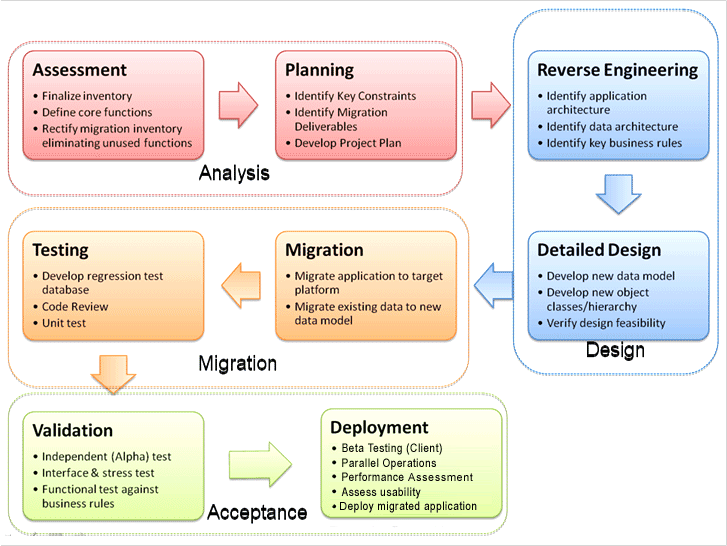
The existing system is inventoried and serves as the baseline for migration. Initial assessment will also include formalizing core requirements such as security, key work flow changes
|
Helps establish the baseline for migration and helps identify functions those are not required for migration |
| Planning |
Establish the detailed deliverables and milestones based on the initial project plan and design strategy
|
Provides a refinement of the high level project plan submitted during the proposal phase |
| Reverse Engineering |
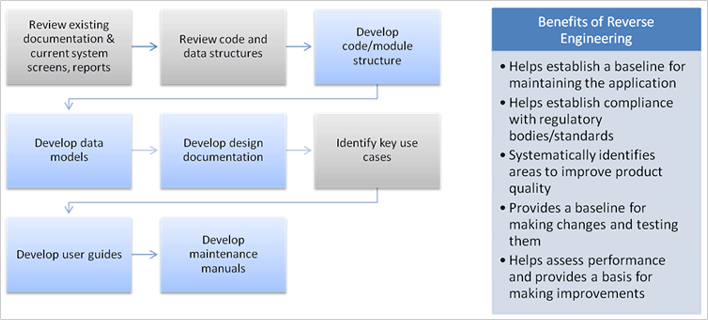
Establish the existing application architecture, data model and business rules that are implemented
|
Provides documentation that will help in future enhancements and comply with regulatory requirements |
| Detailed Design |
In this phase the new object architecture, data models and interface architecture is developed along with prototypes to identify user requirements. Key interfaces are also prototyped to ensure inter-operability
|
Provides clear visibility on the target system with prototypes helping solidify user interface changes
The planned platform is tested for ensuring the feasibility of migration
|
| Migration |
The existing system is migrated and ported to the new platform module by module
|
The incremental migration reduces the risk of failure
|
| Testing |
A regression test bed that can test the business rules and interfaces will be developed and used as the baseline for testing
|
As each module is migrated code review and unit testing ensure program correctness and reduces defects during the validation phase |
| Validation |
In addition to design reviews and prototypes which involve the users throughout the migration lifecycle, the validation step involves full testing of functionality against business rules, stress testing and verification of all SLAs
|
Validation life cycle milestone helps detect errors early reducing overall costs. Integration testing, stress testing and independent validation help ensure that errors are detected and corrected prior to deployment |
| Deployment |
The validated system is tested by users using the use cases. The system will also be tested for performance and availability as part of parallel operations ensuring that the migrated system has retained all operational functionality
|
User testing and parallel operations reduce the risk of errors during production use |